


Across social media, political forums, and university campuses, many Africans passionately debate global conflicts, especially tensions involving Western powers, Iran, and the Israel–Palestine war. These discussions often become emotional and ideological, with Africans taking strong positions in disputes happening thousands of kilometers away.
Yet an important question arises from an African-centered perspective: why should Africans devote so much attention to geopolitical conflicts that historically have brought little benefit to Africa?
This question challenges the priorities of modern Pan-African discourse and encourages a deeper reflection on where African political energy should truly be directed. At its core is a simple but powerful thesis: Africa’s progress will depend far more on confronting its own internal challenges than on taking sides in foreign geopolitical struggles.
A Personal Moment That Changed My Perspective
A few days ago, I found myself in a heated conversation with a group of friends at a small roadside café. The television above the counter was broadcasting international news about rising tensions in the Middle East. One friend passionately defended one side of the conflict, another argued just as fiercely for the opposing side. Voices grew louder as each person tried to prove their point.
Meanwhile, just outside the café, a young boy walked past carrying a plastic container of water on his head. The road was filled with potholes, electricity in the area had been out for most of the day, and a nearby community school had recently closed because teachers had not been paid for months.
Watching that scene, a quiet realization struck me: we were arguing intensely about wars and governments thousands of miles away, yet the problems surrounding us, the failing infrastructure, the poverty, the insecurity, were far more immediate and far more relevant to our lives.
That moment crystallized a difficult truth: Africa is often distracted by global conflicts while urgent problems at home remain unresolved.
Historical Wounds from External Powers
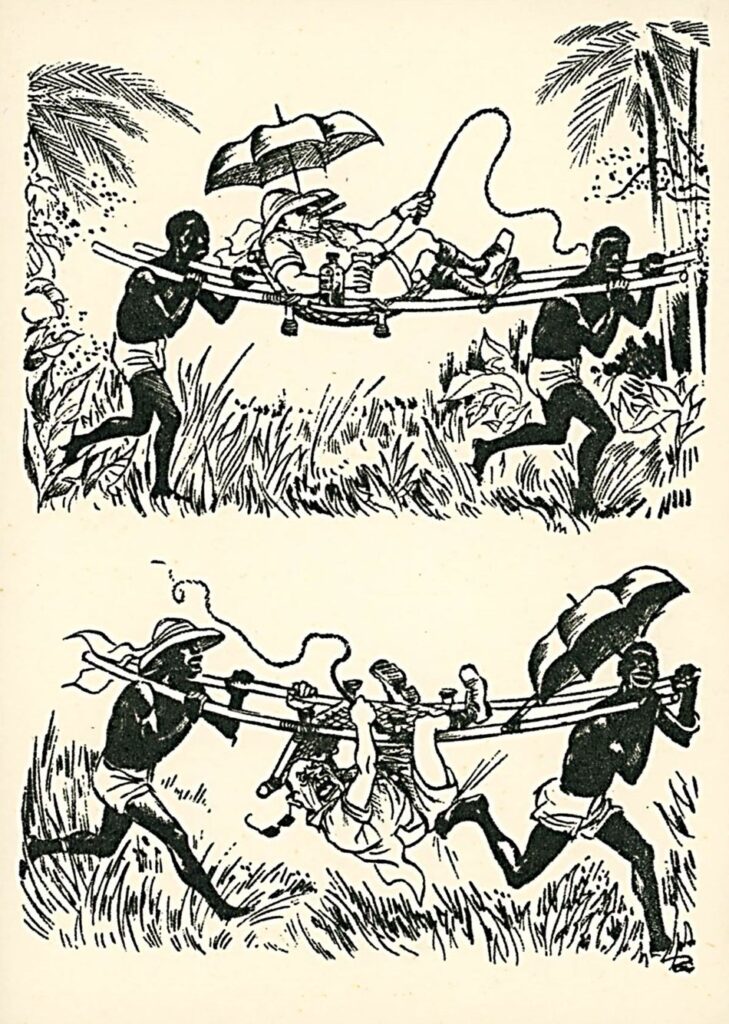
Africa’s relationship with global powers has historically been shaped more by exploitation than by partnership. Western nations inflicted one of the most devastating tragedies in human history through the transatlantic slave trade. Millions of Africans were forcibly taken from their homes, families were destroyed, and entire societies were destabilized.
The damage did not end with slavery. Colonial rule imposed foreign political systems, dismantled traditional structures, suppressed local religions, and extracted vast amounts of natural resources to fuel Western economic growth. Many of Africa’s current economic and political challenges are rooted in this legacy.
But Western powers were not the only external actors involved in systems that harmed Africans. The Arab slave trade, which operated across the Sahara and along the Indian Ocean for centuries, also enslaved millions of Africans. In some narratives, its social consequences are considered even more enduring due to the cultural erasure and the long-term marginalization of Black populations in parts of the Arab world.
Today, discrimination against Black communities in some regions of the Middle East remains a topic of ongoing debate and criticism.
When viewed historically, both Western and Middle Eastern powers have participated in systems that exploited African people and undermined the continent’s development.
Contemporary Geopolitics and Africa
Modern geopolitical conflicts frequently draw reactions from African populations. Discussions about Iran, for example, often appear in African political spaces. Critics argue that Iran’s Islamic regime maintains strict domestic control while also supporting militant networks in various regions, including parts of Africa. According to these critics, such involvement contributes to instability on the continent.
At the same time, the Israel–Palestine conflict generates strong emotional responses across Africa. Many Africans express solidarity with Palestinians, often viewing their struggle through the lens of colonialism and occupation. Others strongly condemn Israel’s military campaigns in Gaza.
These reactions are understandable from a moral standpoint. However, the key question remains: what practical benefit does Africa gain from taking sides in these disputes?
Both Western nations and Middle Eastern powers possess immense military capabilities, vast financial resources, and strategic control over global energy systems. Africa, in contrast, continues to confront deep development challenges.
The Problem of Misplaced Priorities
The central critique of this perspective is that Africa’s involvement in distant geopolitical debates often represents a misplaced priority.
The continent faces urgent challenges that directly affect millions of lives. Poverty remains widespread despite Africa’s vast natural resources. Infrastructure deficits slow economic growth. Armed conflicts and insurgencies destabilize several regions. Weak governance and corruption continue to undermine public trust and national development.
Given these realities, directing attention toward conflicts in other parts of the world can distract from the work that urgently needs to be done within Africa itself.
External powers already possess the military strength, economic leverage, and diplomatic influence required to pursue their geopolitical interests. Africa does not gain strategic advantage by inserting itself into conflicts it cannot meaningfully influence.
A Pragmatic African Position
From a pragmatic standpoint, Africa should adopt a more independent and strategic posture toward global conflicts. Instead of aligning emotionally with foreign powers, Africans must recognize that many external actors, whether Western or Middle Eastern, have historically pursued their own interests, often at Africa’s expense.
This does not mean Africans should ignore global injustice. Rather, it means recognizing that the continent’s primary responsibility is to its own people.
Reducing poverty, strengthening governance, improving education systems, building infrastructure, and addressing insecurity should take precedence over ideological battles tied to foreign conflicts.
Re-Centering the African Agenda
Ultimately, Africa’s future will not be determined by the outcome of geopolitical struggles in the Middle East or rivalries between global superpowers. It will be shaped by the ability of Africans to address the structural problems within their own societies.
The anecdote at that roadside café remains a powerful reminder: while the world debates distant wars, many African communities still struggle with basic necessities, electricity, education, clean water, and economic opportunity.
A truly Pan-African agenda must therefore focus first on internal transformation. By strengthening institutions, fostering regional cooperation, and building economic self-reliance, Africa can eventually engage the global stage from a position of strength.
Until then, the most important struggle for Africa is not abroad.
It is at home.
y